

Let to Buy Mortgages
Keep the home you already own, let it out, and buy the one you actually want to live in. It is two mortgages arranged as one piece of work, and it lives or dies on the detail — rental cover, loan to value, stamp duty and timing.
- Release equity from your current home for the new deposit
- Both mortgages arranged together and timed to complete as one
- Honest advice on the 5% stamp duty surcharge before you commit
- Whole-of-market access to lenders who genuinely do let to buy
broad range of UK lenders
Momentum Financial Services Ltd · FRN 1011740
a real adviser, start to finish
rates, fees & total borrowing
Tell Us About Let-to-Buy Plans
Tell us about the home you want to keep, the one you want to buy, and roughly what you think each is worth. We will come back with a realistic view of what the numbers allow — including the costs people usually forget.
Mon–Fri 9am–5pm · Saturday by appointment
Enquiry Form
Tell us about your situation and we'll get back to you with tailored advice.
What Let to Buy Actually Means
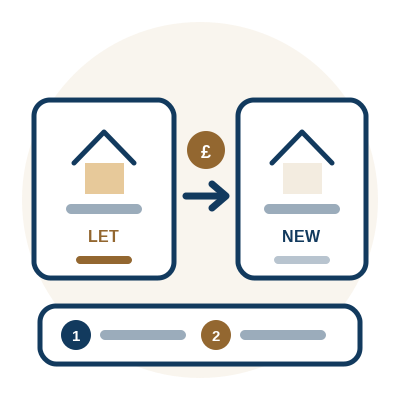
Let to buy is what you do when you want to move but you do not want to sell. Your current home is remortgaged onto a buy to let basis and rented out, and at the same time you take a new residential mortgage on the property you are moving into. Two loans, two properties, one transaction.
The reason most people reach for it is the deposit. Remortgaging the existing home onto buy-to-let terms usually releases equity, and that released capital becomes the deposit on the onward purchase. Without it, a lot of moves simply do not happen — the money is real, but it is locked in the walls of a house you are still living in.
The other reason is conviction about the property itself. Perhaps it is in an area you expect to hold value, perhaps the rate on it is one you will not see again, perhaps it was a family home you are not ready to part with. Whatever the reason, the decision to keep it is usually made first, and the financing is arranged around it.
It is worth being clear about what changes. On completion you stop being an owner-occupier of that property and become a landlord, with every duty that carries. You also own two properties, which changes your tax position immediately and again when you eventually sell. Neither is a reason not to do it, but both belong in the decision rather than in a nasty surprise six months later.
How the Two Mortgages Fit Together
The let-to-buy leg is assessed like any other buy to let: on the rent, not on your salary. Lenders apply an interest coverage ratio at a stressed rate rather than the rate you will actually pay. One buy-to-let lender, for example, works to 125% cover for basic-rate taxpayers and 160% for higher-rate taxpayers; a building society lender uses 145% for higher-rate taxpayers at the higher of pay rate plus 2% or 5.5%. The exact figures differ by lender, and that difference decides how much equity you can release.
Maximum loan to value on the property you are letting is tighter than on a normal residential mortgage, and it varies more than people expect. Among lenders we place these cases with, the ceiling ranges from around 70% at the cautious end to 80% at the more generous. That spread is the single biggest lever on how much deposit the move can generate, which is why the choice of lender comes before the choice of rate.
The residential leg is assessed on your income in the ordinary way, but with a wrinkle: the new lender has to decide what to do about the mortgage you are keeping. Some will exclude it entirely where the rent comfortably covers it — one high street bank will do this where the property is self-financing. Others take a deficit-only approach, ignoring surplus rent but adding any shortfall to your outgoings. A large building society simply requires affordability to cover every mortgage outstanding at completion. Three reasonable positions, three very different borrowing figures.
Then there is who does what. Some lenders will handle both legs and cap the combined loan to value across the two — one high street bank works to 90% or less on that combined basis. Others will not: one buy-to-let lender only accepts let-to-buy applications where the onward purchase is going to a different lender, and another high street bank no longer writes new buy to let at all, so its residential arm can only ever do one side. Getting this pairing right at the outset avoids a rebuild of the whole case later.
The Stamp Duty Surcharge, and When You Get It Back
This is the cost people most often miss, and it is not small. Because you are keeping the old home, you will own two properties at the end of the day, so the 5% additional property surcharge applies to the whole price of the new one. On a £450,000 purchase that is £22,500 on top of the standard duty.
There is an exception for people replacing their main residence, and it does not help here. HMRC’s test requires you to have actually disposed of the previous main home on or before the day you buy the new one. Keeping it and letting it out is precisely what fails that test. It is worth understanding that this is not a technicality being applied harshly — it is the rule working exactly as designed.
The surcharge is refundable, but only if you go on to sell the former home within three years of the new purchase. If you do, you claim the refund within twelve months of whichever is later: the sale, or the filing date of the stamp duty return on the new property. HMRC will extend the three years in genuinely exceptional circumstances, but you should plan on the deadline rather than the exception.
Tax rates, bands, thresholds and reliefs described on this page were checked against GOV.UK on 1 October 2026. Tax treatment depends on your individual circumstances and may change, including at a fiscal event. Momentum Financial Services Ltd and Falcon Finance do not provide tax or legal advice. Next scheduled review: 30 November 2026.
One more thing worth saying plainly: first-time buyer relief is not available on a let to buy. You already own a property, so the nil-rate band to £300,000 does not apply, however new to buying your onward home may feel.

Read More Before You Decide
A let to buy touches several decisions at once. These are the pages worth reading alongside it.
Buy to Let Mortgages
Rental cover, stress testing, and personal against company ownership compared.
Remortgage Advice
Coming off a fixed rate, raising capital, or moving away from your current lender.
Home Mover Mortgages
Porting, extra borrowing and timing when you are moving to your next home.
Tax on Rental Income
What is taxable, what you can still deduct, and how Section 24 works now.
Buy-to-Let Calculator
Check whether the rent covers the stress test lenders apply.
Loan to Value Calculator
Find the LTV band your deposit puts you in, and why that changes the rate.
Capital Gains Tax When You Eventually Sell
While a property is your only or main home, the gain on it is generally covered by Private Residence Relief. Once you move out and let it, that relief stops covering the whole period. When you finally sell, the gain is apportioned across your ownership: the years you lived there are relieved, the years you let it are not.
The final nine months of ownership always qualify for relief regardless of whether you were living there, which softens the position slightly at the end. That extends to thirty-six months if you are disabled or move into a care home.
Do not count on Lettings Relief. Since April 2020 it has only applied where you shared the property with your tenant — a lodger arrangement, in effect. A let-to-buy landlord who moves out entirely cannot claim it, which catches out people working from guidance written before the change.
On the numbers: residential property gains are taxed at 18% to the extent they fall within your basic rate band and 24% above it, the annual exempt amount is £3,000 for 2026/27, and any tax due must be reported and paid within 60 days of completion. That 60-day deadline is short and carries penalties, so it is worth knowing about years before it applies rather than the week after you exchange. We are mortgage advisers rather than tax advisers, so treat this as the shape of the issue and take advice from an accountant on your own figures.
Let to Buy or Consent to Let?
Consent to let is the lighter-touch alternative: you ask your existing lender for permission to rent the property out and keep the residential mortgage you already have. Where lenders grant it, the terms vary. One high street bank charges £120 up front and £120 a year, and wants the mortgage to have been held at least six months. A large building society adds a 0.5% loading to the rate and leaves the permission open-ended until you tell them the letting has stopped. A building society lender applies a loading of up to 1% where it has agreed, and up to 2% where it has not. Another high street bank normally lets you keep your existing rate until the deal ends, then moves you to buy-to-let products.
The deciding factor is usually equity, not cost. Consent to let leaves your existing loan exactly as it is, which means it releases nothing. If the deposit for your onward purchase has to come out of the home you are keeping, consent to let cannot deliver it and let to buy can. That single difference settles most cases before rate and fees are even discussed.
Where consent to let does win is on simplicity and expense when you already have the deposit — from savings, a sale elsewhere, or family help. No remortgage, no new arrangement fee, no valuation, no early repayment charge on a deal you are part-way through. If you are moving for a job and may return within a couple of years, it also keeps your options open in a way a full buy-to-let remortgage does not.
There is a third answer that no one likes hearing but which is sometimes right: sell. If the rent barely covers the mortgage, the property needs work to meet letting standards, and the surcharge and eventual capital gains bill are both material, keeping it can be a worse outcome than a clean sale. We would rather tell you that early than arrange a mortgage that quietly loses you money for a decade.
You Are Becoming a Landlord
The rules changed materially on 1 May 2026, and anyone letting a former home is letting under the new regime from day one. Section 21 no-fault eviction is gone. Every tenancy is now an assured periodic tenancy, so fixed terms no longer exist, and your tenant can leave on two months’ notice. If you need the property back to move in or to sell, you serve four months’ notice on that ground.
Rent can only be increased once a year, using the statutory Form 4A with two months’ notice, and your tenant can challenge an above-market increase at the First-tier Tribunal. You cannot ask for more than one month’s rent in advance, you cannot accept offers above your advertised rent, and you can only refuse a request to keep a pet if you have a valid reason.
On the property itself, the current legal minimum is an EPC rating of E. A C-equivalent standard is confirmed for all tenancies from 1 October 2030, with a £10,000 cost cap per property. The regulations are not yet on the statute book, so treat 2030 as settled policy rather than settled law — but if the home you are keeping is a cold, solid-walled Victorian at band E, budget for that work now rather than in 2029.
Then the standing obligations: an annual gas safety check with the record to your tenant within 28 days, an electrical inspection at least every five years, the deposit in a government-approved scheme, working smoke and carbon monoxide alarms, and Right to Rent checks. Some councils also operate selective licensing, which requires every private landlord in a designated area to hold a licence — worth checking with the local authority before you commit, because it is easy to miss and expensive to get wrong.
We are based in Sevenoaks and advise clients across South East London and Kent, including Lewisham, Bromley and Sidcup. We are not limited to those areas: we work with clients right across the UK, including London, Essex, Surrey, Sussex, Hertfordshire and Buckinghamshire, and most cases are handled by phone and video, so where you live is rarely a barrier. You can also read our buy-to-let mortgage advice.
Before You Let It Out
How We Arrange A Let to Buy
A let to buy is two mortgages that have to land on the same day. We run both sides ourselves so nothing falls between two lenders and two timetables.
Understand The Move
We start with why you are keeping the property, what you need the onward purchase to do, and what you can realistically afford to hold.
Test The Rent
We run the expected rent through the coverage rules of the lenders likely to suit you, which tells us how much equity the move can actually release.
Compare The Routes
We put let to buy against consent to let, and against simply selling, so the decision is made on numbers rather than assumption.
Pair The Lenders
We choose a combination that will take both legs on terms that work, since some lenders insist the other side goes elsewhere.
Submit Together
Both applications go in as a linked case, with one solicitor acting on both transactions where the lender requires it.
Land Them On One Day
We chase both valuations and both offers, and keep the solicitor, agent and lenders aligned so completion happens simultaneously.
Work out whether the let side of the move stacks up. Try our Rental yield calculator and Second home stamp duty calculator.
Thinking About Let to Buy?
Two mortgages, a stamp duty surcharge and a tenancy to arrange. We will tell you plainly whether it stacks up before you commit to anything.
Read our mortgage guide, view our frequently asked questions, or explore buy-to-let mortgages.
Let to Buy: Frequently Asked Questions
How much deposit do I need for a let to buy?
There are two figures to think about. On the property you are letting, the maximum loan to value ranges from around 70% to 80% depending on the lender, so you need to retain 20% to 30% equity in it. On the onward purchase, the deposit typically comes from the equity released by that remortgage, and residential loan to value limits apply as normal. Where one lender is handling both legs it may cap the combined loan to value across the two properties — one high street bank works to 90% or less on that basis.
Will I have to pay the stamp duty surcharge?
Yes. Because you keep the existing home, you will own two properties on completion, so the 5% additional property surcharge applies to the full price of the new one. The replacement-of-main-residence exception does not help, because HMRC requires you to have actually disposed of the previous main home on or before the day you buy. If you later sell that former home within three years you can reclaim the surcharge, claiming within twelve months of whichever is later: the sale, or the filing date of the stamp duty return on the new property.
Do both mortgages have to complete on the same day?
It depends on the lender, and it is one of the things that most often derails a case. One buy-to-let lender, for example, only accepts let-to-buy applications where there is a simultaneous onward purchase, and requires the same solicitor to act on both transactions. Other lenders are more relaxed. Because the released equity is usually funding the deposit, simultaneous completion is the practical norm even where it is not strictly demanded, so we plan for it from the start.
Is let to buy better than consent to let?
It depends almost entirely on where your deposit is coming from. Consent to let leaves your existing mortgage untouched, which means it releases no equity — so if the deposit for the new home has to come out of the old one, only a let-to-buy remortgage can deliver it. If you already have the deposit from savings or elsewhere, consent to let is usually cheaper and simpler: no new arrangement fee, no valuation, and no early repayment charge on a deal you are part-way through. Costs vary, from a flat annual fee to a loading on your rate.
Will the mortgage on the property I am letting count against me?
Lenders take three different views, and it materially changes what you can borrow. Some exclude the buy-to-let commitment entirely where the rent comfortably covers it. Some ignore any surplus rent but add a shortfall to your outgoings. Others require your income to cover every mortgage outstanding at completion, regardless of rent. Matching your circumstances to a lender whose approach suits them is usually worth more than chasing the lowest headline rate.
What will the tax be when I eventually sell the let property?
The gain is apportioned across your ownership. The period you lived there is generally covered by Private Residence Relief; the period you let it is not. The final nine months of ownership always qualify regardless. Lettings Relief will not usually help, because since April 2020 it only applies where you shared the property with your tenant. Residential gains are taxed at 18% within the basic rate band and 24% above it, the annual exempt amount is £3,000 for 2026/27, and the tax must be reported and paid within 60 days of completion. Your accountant should run your actual figures.
Do I need a minimum income for a let to buy?
Not always. One buy-to-let lender states there is no minimum personal income requirement, while a building society lender looks for £20,000 of gross earned income and more where a portfolio is involved. What matters far more is the affordability on the new residential mortgage, since that is assessed on your income in the ordinary way, and the expected rent on the property you are keeping, since that determines the let-to-buy leg.
What do I have to do differently now I am a landlord?
From 1 May 2026 every tenancy in England is an assured periodic tenancy and Section 21 no-fault eviction no longer exists. Rent can rise once a year via the statutory Form 4A with two months’ notice, you cannot take more than one month’s rent in advance, and pets can only be refused with a valid reason. On the property, the minimum EPC rating is E, with a C-equivalent standard confirmed for all tenancies from October 2030. You will also need an annual gas safety check, an electrical inspection at least every five years, the deposit protected in an approved scheme, working alarms, and Right to Rent checks.
Have a different question? Get in touch or read our full mortgage FAQs.
 Written and reviewed by Osman Emin, CeMAP, mortgage and protection adviser · FCA register OCE01003 · Updated