

UK Mortgage Market Update: Latest Rates and Outlook
The Bank of England raised Bank Rate from 3.75% to 4% on 5 November, its first rise since August 2023, and said another may follow unless the pressure from energy prices eases. Fixed rates had moved ahead of the decision: Moneyfacts put the average two-year fix at 5.97% and the average five-year fix at 6.00% on the day, against 4.94% for a two-year fix a year earlier. Inflation was 3.5% in September, and the Budget on 28 October left stamp duty alone but raised tax on rental income from 2027. If you are on a tracker or variable rate, expect your payment to rise as lenders pass the change on. If your fixed rate ends in the next six months, compare your options now.
- Bank Rate up from 3.75% to 4% on 5 November, vote 8–1
- Average two-year fix 5.97%, five-year 6.00% on 5 November (Moneyfacts)
- Inflation 3.5% in September; the Bank expects a peak of about 5% in mid-2027
- Next Bank Rate decision Thursday 17 December
broad range of UK lenders
Momentum Financial Services Ltd · FRN 1011740
a real adviser, start to finish
rates, fees & total borrowing
Tell Us About Your Mortgage
Rates are repricing quickly and the right answer depends on your deposit, your income and how long you plan to stay. Tell us where you are and we will give you a straight view of your options.
Mon–Fri 9am–5pm · Saturday by appointment
Enquiry Form
Tell us about your situation and we'll get back to you with tailored advice.
Where Mortgage Rates Stand Going Into November
Fixed rates stayed close to 6% through October and into November. Moneyfacts put the average two-year fix at 5.96% and the average five-year fix at 5.99% on 15 October, up from 5.73% and 5.78% a month earlier. On the day of the Bank’s decision the averages were 5.97% and 6.00%, as MoneyWeek reported. A year earlier the average two-year fix was 4.94%.
What lenders pay to fund fixed rates eased slightly at the end of October. The five-year SONIA swap rate closed at 4.69% on 29 October, a little below the 4.73% recorded on 29 September, and the two-year rate was also 4.69%. Small moves like that rarely reach advertised rates straight away, and with the Bank warning that the November rise may not be the last, we would not plan around fixed rates falling soon.
The rates people actually completed on are lower than the advertised averages. The Bank of England puts the average rate on new mortgages drawn in September at 4.63%, up from 4.60% in August, because many of those loans were at lower loan to values or on rates reserved weeks earlier.
Very few borrowers pay the average, because loan to value changes the price. In the Bank of England figures for September, the average two-year fix at 60% loan to value was 5.01%, against 5.70% at 95%. On a £250,000 repayment mortgage over 25 years, every percentage point is worth about £150 a month, so working out your current loan to value before you shop is usually the most useful ten minutes in the process.
Average Mortgage Rates Table
These tables show average UK mortgage rates from two independent sources. They are market averages, not offers. The rate you are offered depends on your deposit or equity, your income, your credit history and each lender’s criteria on the day.
The two sources measure different things, so read each table on its own. The Bank of England figures are monthly averages of rates quoted by banks and building societies, split by loan to value. Moneyfacts averages every product on sale at the start of the month, across all loan to value bands, which is why its figures run higher.
Bank of England average quoted rates by loan to value
| Product | Loan to value | September 2026 | August 2026 |
|---|---|---|---|
| 2-year fixed | 60% | 5.01% | 4.79% |
| 2-year fixed | 75% | 5.13% | 4.92% |
| 2-year fixed | 85% | 5.26% | 5.02% |
| 2-year fixed | 90% | 5.37% | 5.16% |
| 2-year fixed | 95% | 5.70% | 5.52% |
| 3-year fixed | 75% | 4.93% | 4.77% |
| 5-year fixed | 60% | 4.84% | 4.62% |
| 5-year fixed | 75% | 4.98% | 4.78% |
| 5-year fixed | 90% | 5.17% | 4.95% |
| 5-year fixed | 95% | 5.54% | 5.36% |
| 2-year variable (tracker or discount) | 75% | 4.23% | 4.23% |
| Revert-to rate (similar to a standard variable rate) | Not set by LTV | 6.58% | 6.58% |
Source: Bank of England, quoted household interest rates, monthly averages of rates quoted by UK banks and building societies, not seasonally adjusted. Taken from the Bank of England Database on 1 November 2026. These are averages, not offers.
Moneyfacts market averages
| Measure | 5 November 2026 | Start of October 2026 | Start of September 2026 |
|---|---|---|---|
| Average 2-year fixed rate | 5.97% | 5.93% | 5.59% |
| Average 5-year fixed rate | 6.00% | 5.95% | 5.63% |
| Average time a deal stays on sale | Not yet published | 13 days | 14 days |
Source: Moneyfacts. Start of month figures are from the Moneyfacts UK Mortgage Trends Treasury Report, as reported by Moneyfactscompare.co.uk on 19 October 2026. The 5 November figures were reported by MoneyWeek on the day of the Bank Rate decision; the average time a deal stays on sale is published with the monthly report. Averages across all loan to value bands and all products on sale. These are averages, not offers.
We update this table each month when new figures are published. To see what a rate means for your payments, use our mortgage calculators, or ask us to search the market for your own circumstances.
Bank Rate Rises To 4%: What The Bank Of England Decided
The Bank of England raised Bank Rate by a quarter point to 4% on Thursday 5 November, the first rise since August 2023. The Monetary Policy Committee voted 8–1. Eight members backed the rise to 4%, and Catherine Mann preferred a larger, half-point rise.
The main concern is energy. The conflict in the Middle East is now in its ninth month, higher energy costs are working their way through to prices, and the Bank judges that more of that pressure is still to come. CPI inflation rose to 3.5% in September from 3.1% in August, according to the ONS, and the Bank now expects it to peak at about 5% in the middle of 2027. The October figure is due on 18 November.
The Bank says policy is not on a pre-set path. Governor Andrew Bailey said the rise should not be read as the first in a long run of increases, but that unless the conflict in the Middle East is resolved it is unlikely to be the last, as MoneyWeek reported. The next decision is due on Thursday 17 December.
Trackers and standard variable rates follow Bank Rate, so those payments will rise as lenders pass the change on. Moneyfacts estimates the quarter-point rise adds about £37 a month to a £250,000 tracker mortgage over 25 years. Fixed rates had already priced in much of the rise, which is why they climbed through September and October while Bank Rate stayed at 3.75%.

House Prices: Flat In October, Up 0.5% On The Year
Nationwide’s index shows UK house prices unchanged in October, with annual growth slowing to 0.5%, the weakest since January 2024. The average price was £273,566. Nationwide’s chief economist, Robert Gardner, linked the slowdown to mounting market expectations of Bank Rate increases, which push up the market interest rates that mortgage pricing is based on.
The official figures run a month behind. HM Land Registry and the ONS put the average UK price at £273,000 in August, up 0.9% over the year. England rose just 0.4%, London fell 2.2% to an average of £554,430, and Wales and the North East were both up more than 3%. The September figures are due on 18 November.
Rents are still rising faster than prices. The ONS puts the average UK private rent at £1,406 a month in September, up 3.8% on a year earlier, and £2,338 in London.
If you are selling a flat to buy a house in London or the South East, the gap between the two prices is the figure that matters, because it is the gap your mortgage has to cover. Buyers may find more room to negotiate on homes that have been on the market for a while.
Annual Price Change, August 2026
Read More On The Market
These are the pages people read alongside a market update, depending on which decision is in front of them.
Remortgage Advice
Coming off a fixed rate, raising capital, or moving away from your current lender.
First-Time Buyer Mortgages
Deposits, schemes and what lenders look for when you are buying your first home.
Buy to Let Mortgages
Rental cover, stress testing, and personal against company ownership compared.
Previous updates: October 2026, September 2026 and August 2026.
Mortgage Approvals Fell Again In September
Bank of England figures for September 2026, published on 30 October, showed 53,400 mortgage approvals for house purchase, down from 54,800 in August and, as Housing Today reported, the lowest in nearly three years. Remortgaging approvals with a different lender jumped to 42,600 from 34,000, as more borrowers switched lender when their fixed rate ended. Net mortgage borrowing fell to £3.9 billion from £4.2 billion.
The effective rate on newly drawn mortgages rose to 4.63% from 4.60%, and the average rate across all outstanding mortgages rose to 4.03% from 4.00%. That second figure moves slowly because most borrowers are on fixed rates, but it shows the cost of existing mortgages edging up as cheaper deals from earlier years come to an end.
Consumer borrowing slowed to £1.9 billion from £2.7 billion. Lenders count your monthly credit commitments in affordability, so clearing or reducing card and loan balances before you apply can increase what you can borrow. You can check the effect on our how much can I borrow calculator.
The October figures are due from the Bank of England on 30 November.
What November’s Rates Mean For Your Monthly Payment
On a £250,000 repayment mortgage over 25 years, the 5.97% average two-year fix that Moneyfacts recorded on 5 November costs about £1,606 a month. At the 4.63% average rate people actually completed on in September, the same loan costs about £1,408, close to £200 a month less. The difference comes from deposit size, timing and when the rate was reserved, which is why the averages are only a starting point.
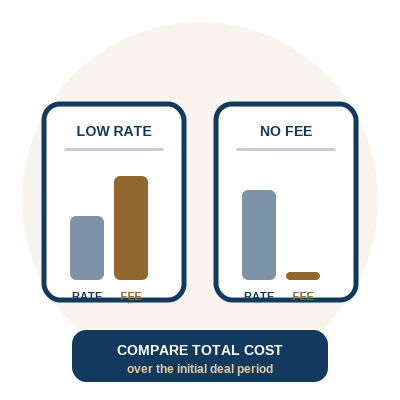
Those figures are illustrative and leave out fees, which can change which deal is actually cheaper, especially on smaller loans. Our September update sets out how to compare total cost over the deal period rather than the headline rate, and you can run your own numbers on our mortgage repayment calculator.
With Bank Rate now at 4%, tracker and variable rates are rising with it, while fixed rates had already priced much of the rise in. If you are on a tracker or a standard variable rate, now is the time to look at what a fixed rate would cost you, and to check whether your current deal has early repayment charges.
If Your Fixed Rate Ends Before Spring
Fixed rates are higher than they were in the summer, so if your deal ends in the next six months it is worth getting your lender’s product transfer offer and a comparison against switching now, rather than waiting for a better moment. Many lenders let you reserve a rate several months ahead and move to a lower one before completion if pricing falls, so securing something early costs little and protects you if rates keep climbing.
The Budget passed without changes to stamp duty or mortgage rules, and Bank Rate has now risen to 4%. The next dates to watch are the October inflation figure on 18 November and the Bank’s next decision on 17 December. Neither is a reason to sit and wait if your end date is close.
The outcome to avoid is lapsing onto your lender’s standard variable rate. The Bank of England’s measure of revert-to rates averaged 6.58% in September. On the same £250,000 loan that is about £1,701 a month, roughly £95 more than the average two-year fix, and variable rates usually rise when Bank Rate does. Our guide to remortgaging in 2026 explains how to compare a product transfer with a switch.
First-Time Buyers: What The Budget Changed
The Budget on 28 October left stamp duty unchanged, so first-time buyers in England and Northern Ireland still pay no stamp duty on the first £300,000 and 5% between £300,001 and £500,000, with no relief at all above £500,000. Check your figure on our first-time buyer stamp duty calculator before you make an offer.
It did change the Lifetime ISA. From 29 October 2026 the charge for withdrawing your savings to buy a home that costs more than the £450,000 cap falls from 25% to 20%. From April 2029 a new First Time Buyer ISA will replace the Lifetime ISA for new savers, with a 25% government bonus capped at £20,000 and a property limit of £450,000, according to the Budget tax documents.
The Budget also confirmed £4.7 billion for the new Your First Home equity loan scheme, which aims to help 70,000 households, with full details still to come. Our guide to home buying schemes sets out what is open now.
Your deposit is still the biggest lever on price. Moving from a 5% to a 10% deposit, or from 10% to 15%, usually improves your rate more than shopping around within the same band. Our deposit guide shows what each band reaches.
Buy To Let: Higher Tax On Rental Income From 2027
The Budget raised the planned tax rates on property income again. From 6 April 2027, rental profits will be taxed at 24% for basic rate taxpayers, 44% for higher rate taxpayers and 49% for additional rate taxpayers, two points more than was announced a year ago, according to the Budget tax documents. Landlords who own property in their own name should look at the numbers now, and our Renters’ Rights Act guide covers the other changes landlords face.
Rents are still rising, up 3.8% over the year to September at an average of £1,406 a month. Higher rents help with lenders’ rental cover tests just as higher fixed rates make those tests harder to pass, so check rental cover at today’s rates before assuming a like-for-like remortgage will go through. Our buy-to-let calculator runs that test for you.
Some landlords will now look again at owning through a limited company. Whether that makes sense depends on your tax position, your plans and the cost of moving property into a company, so take tax advice before deciding. Our limited company buy to let page explains how the lending side works.
On arrears, the latest UK Finance figures, for the second quarter of 2026, showed 77,940 homeowner mortgages in arrears of 2.5% or more of the balance, the eighth quarterly fall in a row. If you are finding payments difficult, speak to your lender early. A temporary switch to interest only, a longer term or a new payment date are all normal arrangements; each lowers the monthly payment but increases the total you pay.
Monthly Email
Get the Mortgage Market Update by Email
Once a month we send a short summary of what has happened to mortgage rates, Bank Rate and house prices, and what it could mean if you are buying, remortgaging or letting. One email a month, and you can unsubscribe at any time.
What To Do Now
With Bank Rate now at 4% and the next decision on 17 December, this is the order we would work through it.
Check Your End Date
Find out exactly when your current rate ends and what the reversion rate is. If that date is inside six months, you are already in the window where action beats waiting.
Get Your Lender's Offer
Ask your existing lender what it will do on a product transfer. That is your baseline. Anything else has to beat it, and sometimes nothing does.
Establish Your Loan To Value
Property values have moved in both directions since you last borrowed. A revaluation can drop you into a cheaper band, or warn you that it will not.
Compare Total Cost, Not Rate
Payments plus fees, less incentives, across the initial period. On a smaller mortgage a product with no fee at a higher rate often wins outright.
Secure Something Early
Reserve a rate you are comfortable with. Most lenders let you switch down if pricing improves before completion, so you keep the floor and the upside.
Review Before Completion
Products last around a fortnight. We re-check yours before the case completes so you are not held to a rate the market has already moved past.
Not Sure What To Do About Your Rate?
Twenty minutes on the phone will tell you whether fixing, switching or holding is the right call for your circumstances. No cost, no obligation, no credit search.
Read our mortgage guide, view our frequently asked questions, or explore remortgage advice.
UK Mortgage Market Update: Frequently Asked Questions
Why did fixed mortgage rates rise before the Bank of England raised Bank Rate?
Because fixed mortgage rates are not priced off Bank Rate. Lenders price fixed products using swap rates, which reflect what financial markets expect interest rates to average over the length of the deal, together with funding costs, risk and how much lending the lender wants. Swap rates rose through August, September and October 2026 on inflation, energy costs and rising gilt yields, so lenders repriced upwards while Bank Rate was still 3.75%. By the time the Bank raised it to 4% on 5 November, much of that rise was already in fixed rates. The same works in reverse: fixed rates can fall before the Bank announces a cut.
Should I fix for two years or five years right now?
There is no universally right answer, and anyone who gives you one without asking about your circumstances is guessing. Two years suits people who expect to move, expect rates to fall, or want to revisit the decision sooner, at the cost of another set of fees and another round of uncertainty in 2028. Five years suits people who value knowing the payment, particularly if the budget is tight. The deciding factors are how long you will stay in the property, whether you can absorb a payment rise, and what the early repayment charges look like.
What happens if I do nothing when my fixed rate ends?
You move onto your lender’s standard variable rate. The Bank of England’s measure of revert-to rates averaged 6.58% in September 2026. On a £250,000 mortgage over 25 years that is roughly £1,701 a month, against about £1,606 on a 5.97% fix, a difference of around £95 a month or more than £1,100 a year, and variable rates usually rise when Bank Rate does. Lapsing onto the standard variable rate is the most common avoidable cost in the market.
How far in advance should I start looking at a remortgage?
Three to six months before your current rate ends. That gives you time to see what your existing lender will offer, compare it against the wider market, get a view on your property’s value, check your credit file and gather income evidence without being rushed. Many lenders will let you reserve a product several months ahead and switch to a cheaper one if pricing improves before completion, so booking early costs you nothing and protects you against further increases.
Is it a bad time to buy a house?
It depends far more on your circumstances than on the market. Buying makes sense if the payments are comfortably affordable with room to spare, your income is stable, you have savings behind you, and you expect to be in the property for several years. It makes less sense if the numbers only work assuming rates fall. Waiting is not risk-free either: cheaper mortgages tend to bring more buyers into the market, which supports prices, so a lower rate later can be offset by a higher purchase price.
Why is the cheapest advertised rate not always the cheapest mortgage?
Because product fees change the arithmetic, and they change it differently depending on how much you are borrowing. A £1,499 fee is about 1.5% of a £100,000 mortgage and about 0.2% of an £800,000 one. On smaller balances a product with no fee at a slightly higher rate frequently costs less overall; on larger balances paying a fee to buy the rate down usually wins. The comparison that matters is total cost over the initial period, including fees and any cashback, not the headline rate.
Are lenders still lending, or has the market tightened?
Lenders are very much still lending, but purchase activity has cooled. There were 53,400 approvals for house purchase in September 2026, down from 54,800 in August, while remortgage approvals with a different lender rose to 42,600. Products remain available at 90% and 95% loan to value. The constraint is not product availability, it is affordability assessment: different lenders calculate income, commitments and expenditure differently, so the amount you can borrow can vary substantially between them on identical circumstances.
Is a tracker mortgage worth considering while fixed rates are high?
It can be, but only if you could genuinely afford the payment if rates rose. A tracker moves with Bank Rate, so the payment falls if the Bank cuts and rises if it does not. The risk is not theoretical: Bank Rate rose from 3.75% to 4% on 5 November 2026, one member of the Monetary Policy Committee voted for a half-point rise, and the Bank expects inflation to peak at about 5% in mid-2027. Before choosing a tracker, work out what the payment becomes if the rate rises by one or two percentage points, and check the early repayment charges.
Have a different question? Get in touch or read our full mortgage FAQs.
 Written and reviewed by Osman Emin, CeMAP, mortgage and protection adviser · FCA register OCE01003 · Updated